Most trivia nights die before week six. Not because the questions are bad, not because the crowd hates the format — because the owner expected week one to look like week twelve. It does not. A trivia night is a slow build with predictable ramp curves, and the venues that hit a stable 12-team crowd by month three follow a recognizable pattern.
Below is the 12-week playbook. Numbers come from venues in the 40-to-100 seat range running weekly trivia. The shape of the curve is the same regardless of theme — what changes is how aggressively you can promote in the first month.
The growth curve you should actually expect
Plan around the curve before you plan around the calendar. A healthy trivia launch hits the milestones below. A flat curve at week six means something is broken — usually the host, the timing, or the prizes — not the audience.
| Week | Teams | Players | What this week is for |
|---|---|---|---|
| 1 | 2-3 | 8-12 | Soft launch with friends and regulars |
| 2-3 | 3-5 | 12-20 | Reps for the host; refine timing |
| 4-6 | 5-7 | 20-28 | Returning teams stack with new walk-ins |
| 7-9 | 7-10 | 28-40 | Word of mouth kicks in |
| 10-12 | 10-12 | 40-48 | Stabilization; the night feels real |
If your curve is flatter than this by week eight, the playbook below has the levers. If it is steeper, you have a great host or a lucky theme — lock both in.
Weeks 1 to 3: launch and survive
The first three weeks are not a marketing problem. They are a hosting problem. You are running 12 reps to figure out timing, mic levels, score-sheet flow, and how much downtime exists between rounds. Anyone you bring in during this window will see a rough show, and that is fine if they are friendly.
Week 1. Email, Instagram-story, and text-blast every regular you have. Ask three friends with friends to bring teams. Run a simple four-round, 40-question pack with a single picture round. Cap the night at 90 minutes. Do not yet promote it to strangers.
Week 2. Same regulars, plus a soft Instagram post the prior Friday. Still no paid promotion. Use this week to fix whatever broke last week — usually the picture round display or the scoring system.
Week 3. Begin a recurring weekly Instagram and Facebook post on the prior Friday and a story on the day-of. Add a chalkboard at the door. Walk the host script for the first time without referring to it; you should be able to run the night by feel.
Weeks 4 to 6: stack the regulars
Now you start building retention. Most of the players from weeks one through three will not come back unless they had a reason to. Give them one.
Week 4. Introduce a season scoring system. Every team that plays earns points toward a quarterly leaderboard. The top three at the end of 13 weeks split a $300 cash or bar tab pool. This is the single biggest retention lever in trivia, and most owners skip it. A 65-seat sports bar in suburban Atlanta added a leaderboard at week 4 and watched repeat-team rate climb from 35% to 62% by week 8.
Week 5. Start an SMS list at the door. "Want a reminder when next week's theme drops? Text TRIVIA to the number on the chalkboard." A reminder text on Tuesday at 5pm doubles week-six headcount versus Instagram alone.
Week 6. Run your first themed week — Disney, Friends, sitcom 90s, whatever fits the crowd. Themed weeks always pull bigger headcount than general nights, and they give you something to promote in advance. The first themed week is also when you should begin testing how long it takes to write four rounds yourself versus buying a pack.
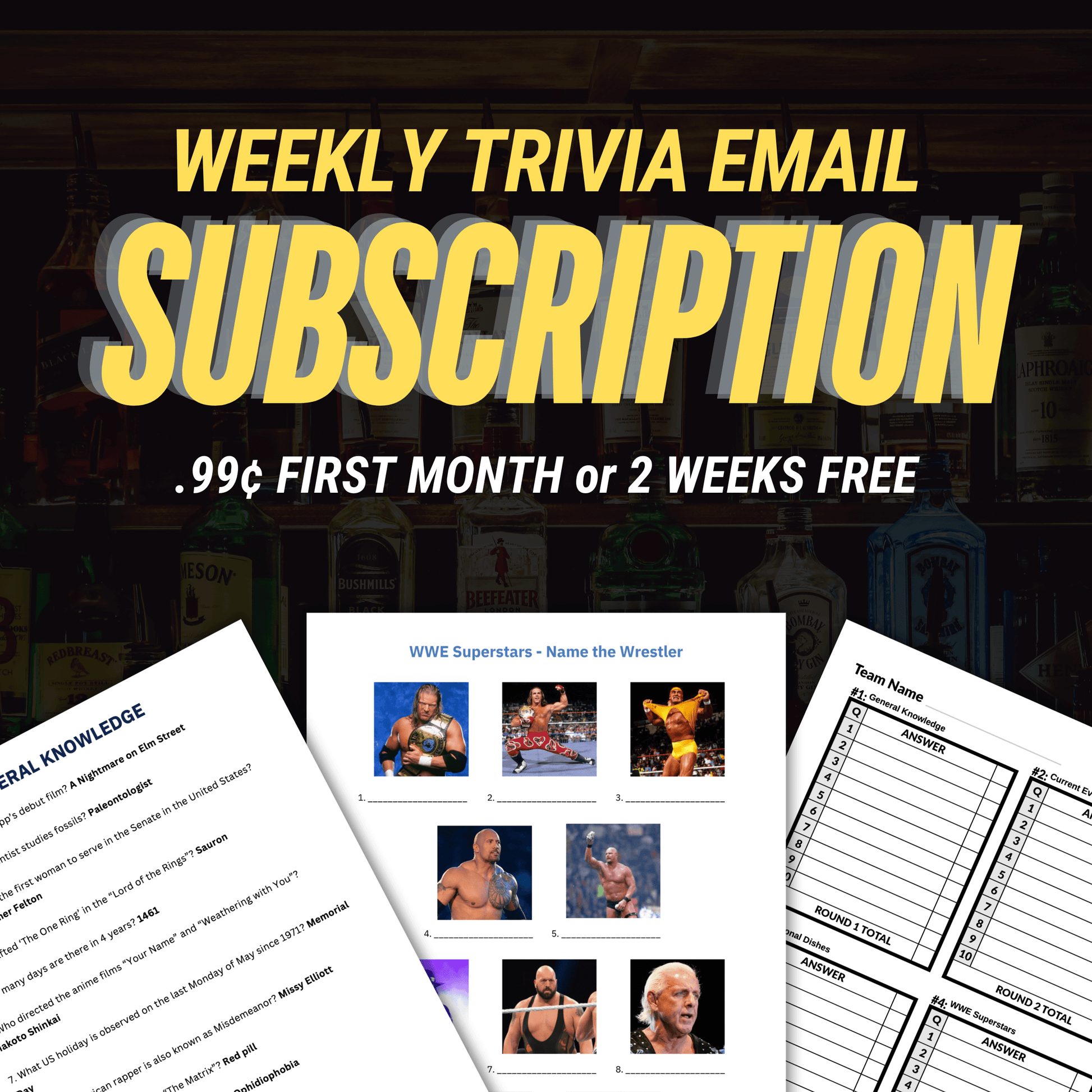
Weekly Trivia Subscription Service
Building a loyal crowd takes 12 weeks of consistent quality. The fastest way to remove the writing bottleneck is a weekly pack — 4 rounds, picture round, host script — delivered every Monday morning.
Weeks 7 to 9: word of mouth carries you
Weeks seven through nine are when the curve gets steep if the night is good. You stop being the only marketer; teams start telling their coworkers, neighbors, and friends. Your job during this window is to not break what is working.
Week 7. Hand a printed flyer to every team after the first themed week. The flyer lists the next four trivia themes. Teams plan around themed weeks — Star Wars night, music decades, geography — and pre-commit two or three weeks out.
Week 8. Add a $20 photo prize for the picture round. Most prize pools are concentrated in the overall winner. Spreading prizes — picture-round winner, halftime team-name vote, last-place — gives more teams a reason to feel they "won" something. A 70-seat tap room in Indianapolis tested distributed prizes versus winner-take-all and saw teams stay 35% longer on distributed nights.
Week 9. First customer-generated content campaign. Tag a winning team in an Instagram post. Ask their permission first. The post pulls those players' personal networks into your feed, which is where new teams come from in week 10 and beyond.
Weeks 10 to 12: stabilize and operationalize
By week 10 you should have 7 to 10 returning teams plus 2 to 4 new teams arriving each week. The crowd is now sustainable without aggressive promotion. The risk shifts: you can lose the night by getting sloppy, repeating questions, or failing to refresh the format.
Week 10. Add a second picture round per night, just to lengthen the visual variety. Refresh the seasonal leaderboard with a public update on the chalkboard.
Week 11. Introduce a "regulars-only" mini-prize. Any team that has played 6 or more weeks gets a side-game prize they alone are eligible for — a free shareable plate or a $10 next-week bar tab. This is a loyalty lock-in that costs almost nothing and signals that returning matters.
Week 12. First leaderboard payout. Teams that placed first, second, and third over the 13 weeks claim their share of the prize pool. Photograph it for your feed. The next 13-week season starts the following week, with last season's top teams as the new defending champions.
Reality check: these are honest numbers, not best-case numbers. Around weeks 5 to 7, expect a dip — one or two early teams lose interest before the leaderboard kicks in. Hold the line. Headcount climbs back by week 9 if the playbook is being followed.
What to track every single week
Owners who hit 12 teams in 12 weeks track the same five numbers. The list is short on purpose — if you cannot fit it on a Post-It, you will not actually update it.
- Headcount: total players plus non-playing companions in the room.
- Repeat team rate: teams from week N-1 that came back in week N. Healthy by week 8 is above 50%; by week 12 above 65%.
- Average ticket on trivia night: versus the same night without trivia. Lift should hold steady at 25-40% above baseline once the night stabilizes.
- SMS list growth: sign-ups per week. Should grow 3-6 names per week from week 5 forward.
- New team count: teams that have never played before. Should never drop to zero — a stable trivia night still pulls 1-3 new teams a week from word of mouth.
Run those five on a single Google Sheet, updated within an hour of the night ending while the staff still remembers the headcount.
The four mistakes that flatten the curve
Almost every trivia night that fails to grow does one of these things. Avoid them and the curve above will hold.
- Inconsistent night. Skipping a Tuesday because of a holiday or staff shortage costs more headcount than canceling a wedding cake. Trivia regulars schedule their week around it; once you skip, they assume it is over.
- Unpredictable host. Different host every other week, different timing, different scoring style. Players want a recurring social ritual, not a variety show.
- Too-hard questions early. Difficulty creep in the first six weeks — especially if you write your own questions — chases off casual teams. Start medium, get harder only after the leaderboard feels competitive.
- No prize visibility. Teams who do not see the prize do not chase the prize. Put the cash, gift card, or bar-tab voucher on the chalkboard at the door before the night starts.
What success at week 12 actually looks like
You will know the playbook worked when you stop being able to walk through the room without saying hello to four teams. The night will run itself. Servers will know the regulars' drink orders. Teams will arrive at 6:45pm because the chairs fill up by 7. Two of the leaderboard teams will be in trash-talk territory and one of those teams will book a private event with you in the next quarter.
That is the build. Twelve weeks, five tracked numbers, one weekly pack, and one consistent host. The compounding starts at week eight and lasts as long as you keep the night honest.